|
 They say that talented people belong to the whole
world. However, there are countries that hold the credit for giving the genius
to the world and have therefore more claims to his fame. Does Pushkin belong to
the world? Yes, but first and foremost he is a Russian poet. Is Leonardo da
Vinci one of the world's greatest painters? No doubt about that, but Italy has
more reasons to claim his as its own. Are Shakespeare's works a global legacy?
Of course, but the British have every reason to call the Bard «our
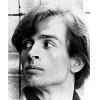
Shakespeare». However, brilliant ballet dancer Rudolf Nureyev spent
his whole life in quest of ultimate freedom and independence, trying to break
free from any ties and bonds, and succeeded - today Nureyev is seen as a genius
beyond nationalities and borders. They say that talented people belong to the whole
world. However, there are countries that hold the credit for giving the genius
to the world and have therefore more claims to his fame. Does Pushkin belong to
the world? Yes, but first and foremost he is a Russian poet. Is Leonardo da
Vinci one of the world's greatest painters? No doubt about that, but Italy has
more reasons to claim his as its own. Are Shakespeare's works a global legacy?
Of course, but the British have every reason to call the Bard «our
Shakespeare». However, brilliant ballet dancer Rudolf Nureyev spent
his whole life in quest of ultimate freedom and independence, trying to break
free from any ties and bonds, and succeeded - today Nureyev is seen as a genius
beyond nationalities and borders.
Nonetheless, Rudolf Nureyev was born in Russia, on a
Trans-Siberian train near Irkutsk, Siberia, while his mother Farida was
travelling to Vladivostok, where his father Hamat, a Red Army political
commissar, was stationed. It happened on March 17, 1938. From Siberia
Nureyev's
family soon moved to Moscow, but with the onset of World War II the
Nureyevs evacuated
to the city of Ufa, where Rudolf Nureyev was raised.
Independent and willful, Rudolph was difficult to deal
with from his early years: he would fight with his father, defending his
right
to independence, and had no friends in his class due to frequent fits of
rage
on his part provoked by his mates' incessant teasing and bulling.
Nureyev's
academic progress was poor and getting worse each year, but the boy
hardly
cared as he was fully engaged in something else - when his mother
smuggled him
and his sisters into a performance of the ballet «Song of the Cranes»,
he fell
in love with dance. As a child he was encouraged to dance in Bashkir
folk
performances and his precocity was soon noticed by teachers who
encouraged him
to train in Leningrad.
On a tour stop in Moscow with a local ballet company,
Nureyev auditioned for the Bolshoi ballet company and was accepted.
However, he
felt that the Kirov Ballet School was the best, so he left the local
touring
company and bought a ticket to Leningrad. It was not until 1955 when he
was
accepted by the Leningrad Choreographic School, the associate school of
the
Kirov Ballet. He was 17 at the time. In his three years with the Kirov,
he
danced fifteen roles, including full length roles in Don Quixote,
Gayane,
Giselle, La Bayadere, The Nutcracker, Swan Lake, and The Sleeping
Beauty. He
became one of the Soviet Union's best-known dancers and was allowed to
travel
outside the Soviet Union, when he danced in Vienna at the International
Youth
Festival.
His offstage reputation was equally sensational,
bringing him constant trouble with both the Kirov management and the
Russian
political authorities. In the Kirov's first-ever appearance in Paris in
1961
Nureyev was an outstanding success, yet his defiance of company
regulations
provoked a command return to Moscow. On June 17, 1961, Nureyev «dashed
to
freedom» and cut his ties with the Soviet Union, seeking political
asylum at Le
Bourget Airport in Paris.
It's still unclear whether this escape was pre-planned
or was an impulsive move o a desperate man who tasted freedom. According
to
some sources, Nureyev's defection was triggered by the actions of KGB:
having
obtained information about homosexual liaisons of the dancer in the
Paris artistic
milieu (Nureyev ceased to conceal his orientation as soon as his crossed
the
border though never advertised his sexual preferences), the KGB
officials decided
to send Nureyev back to Moscow immediately. Nureyev, who didn't want
this to
happen, chose to remain in France. It is interesting that Nureyev was
never
critical of the socio-political system of the Soviet Union.
Within five days after his defection, Nureyev embarked
on a six-month season with the international Grand Ballet du Marquis de
Cuevas,
dancing the Prince and the Blue Bird in The Sleeping Beauty. As partner
to
Rosella Hightower, he made his London debut in October 1961 at the Royal
Academy of Dancing, where he met the ballerina Margot Fonteyn, who
subsequently
became his principal partner for many years. Together Nureyev and
Fonteyn
premiered Sir Frederick Ashton's ballet Marguerite and Armand, a ballet
danced
to Liszt's B minor piano sonata, which became their signature piece.
They
always completely sold out the house. Films exist of their partnership
in Les
Sylphides, Swan Lake, Romeo and Juliet, and other roles.
Nureyev became a regular guest artist with the Royal
Ballet from 1962 to the mid-1970s, in addition to performing with Ruth
Page's
Chicago Opera Ballet, American Ballet Theatre, and on U.S. and French
television. In 1962, Nureyev made his screen debut in a film version of
Les
Sylphides. In 1977 he played Rudolph Valentino in Ken Russell's
Valentino, but
he decided against an acting career in order to branch into modern dance
with
the Dutch National Ballet in 1968. During the 1970s, Nureyev appeared in
several films and toured through the United States in a revival of the
Broadway
musical The King and I.
With an inexhaustible stamina, Nureyev continued to
perform at a non-stop pace, acquiring over 90 roles and appearances with
over
30 major ballet and modern dance companies. Nureyev's own first
production was
the last act of La Bayadere for the Royal Ballet in November 1963, and
his
first reconstruction the 19th-century three-act classic Raymonda for the
Royal
Ballet in June 1964. Self-reliance and a compulsive drive directed his
energy
into a performing schedule around the world that only Anna Pavlova could
equal.
His guest performances were slightly curtailed with his assumption of a
three-year directorship of the Paris Opera Ballet in 1983. He is
credited with
bringing new life to the Opera Ballet, restoring it to a position as one
of the
world's great companies and nurturing a whole generation of wonderful
stars. A
mercurial character, shrewd, cunning, charming, and passionate, Nureyev
demonstrated a commitment and a savage power equaled by no other dancer
in his
day.
He socialized with Freddie Mercury, Jacqueline Kennedy
Onassis, Mick Jagger, Andy Warhol and Talitha Pol, but developed
intolerance
for celebrities. When AIDS appeared in France around 1982, Nureyev took
little
notice. For several years he simply denied that anything was wrong with
his
health. When, about 1990, he became undeniably ill, he is said to have
attributed the symptoms to other ailments. He tried several experimental
treatments but they did not stop his deteriorating health.
In March 1992, Rudolf Nureyev, living with advanced
AIDS, visited Kazan and appeared as a conductor in front of the audience
at
Musa Calil Tatar Academic Opera and Ballet Theater in Kazan, who now
presents
the Rudolf Nureyev Festival in Tatarstan.
At his last appearance, a 1992 production of La
Bayadere at the Palais Garnier, Nureyev received a standing ovation. He
died in
Paris a few months later, aged 54. His grave at a Russian cemetery in
Sainte-Genevieve-des-Bois near Paris, features a tomb draped in a mosaic
of an
oriental carpet as Nureyev was an avid collector of beautiful carpets
and
antique textiles.
Nureyev's influence on the world of ballet changed the
perception of male dancers; in his own productions of the classics the
male
roles received much more choreography. Another important influence was
his
crossing the borders between classical ballet and modern dance by
performing
both. Today it is normal for dancers to receive training in both styles,
but
Nureyev was the originator, and the practice was much criticized in his
day.
|